Search engine marketing lives where data meets instinct. It’s not just bidding on words — it’s listening to what people type, feeling the intent behind a search query, and showing up with the right message at the exact moment someone needs it.
When search engines return results, paid search marketing can put your business front and center on search engine results pages and turn search volume into tangible traffic, leads, and sales.
What Is Search Engine Marketing (SEM)?
Search engine marketing, or SEM, is the art of being exactly where your customers are the moment they need you. Think about it: someone sits down, types a question into Google, and you appear — not by chance, but by design.
SEM isn’t just paying for ads; it’s about understanding intent, choosing the right words, and creating a message that clicks with the person on the other side of the screen. Platforms like Google Ads and Bing Ads are your toolkit — combining keyword insight, creative ad copy, smart bidding, and landing pages that deliver what your target audience is searching for.
When done well, SEM doesn’t feel like an ad at all. It feels like you’ve anticipated their need and handed them exactly what they were looking for.
How Search Engine Marketing Works?
When someone types a search query, an ad auction decides which paid listings appear. Google determines ad rank using factors like maximum bid, quality score, ad relevance, and expected click through rate. Advertisers choose target keywords, create ad groups, and set budgets. If your ad wins the auction for a particular user’s search terms, your ad is shown — and you pay when that user clicks. That chain of events is how paid search advertising turns search intent into measurable action. Partnering with an SEO and internet marketing firm can help refine this process, ensuring your campaigns are optimized for maximum impact.
Google Ads Account and Campaign Setup
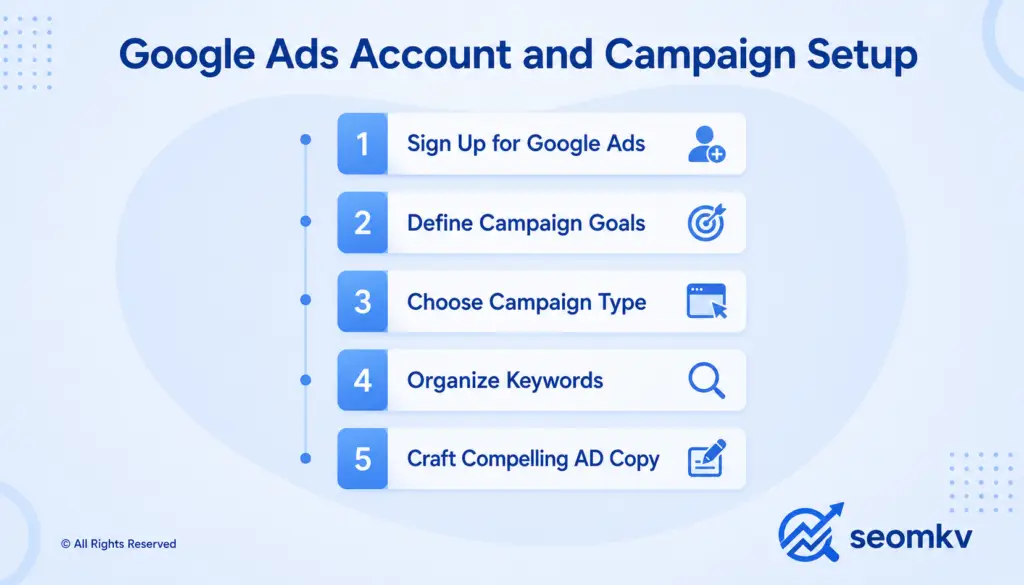
A tidy account structure is where good SEM starts. Organize campaigns by goal, and break them down into tightly themed ad groups with related keywords and ad copy. That account structure improves ad relevance, helps quality score, and makes ongoing optimization easier. Pair that structure with clearly defined landing pages and you’ll set the stage for consistent, traceable results.
- Sign Up for Google Ads – Signing up for Google Ads — historically known as Google AdWords — opens access to search advertising, display placements, and shopping ads. After account creation, review ad platforms and consider complementary channels like Bing Ads if your audience uses other search engines. Pick your ad placements, set an initial budget, and prepare a shortlist of target keywords to test.
- Define Campaign Goals – Start with the outcome you want. Is it traffic, leads, purchases, or store visits? Define those goals and match them to conversions you can track. When goals are clear, you can choose the right bid strategy, allocate budget to the most valuable search terms, and measure whether your paid search marketing is producing a real return.
- Choose Campaign Type – Different goals call for different campaign types. Search campaigns capture intent on search engine results pages. Display campaigns help with reach and brand awareness across other sites. Shopping ads are made for product-driven commerce. Remarketing can pull visitors back. The right campaign type aligns with user behavior and your conversion funnel.
- Organize Keywords – Effective SEM depends on thoughtful keyword organization. Start with extensive keyword research to identify target keywords that match search intent and offer reasonable search volume. Group similar search terms into focused ad groups so your ads stay highly relevant to the user’s search query. Use match types to balance reach and precision, and prune low-performing keywords regularly.
- Craft Compelling AD Copy – Ad copy must answer the user’s question before they click. Lead with benefit, use relevant keywords in headlines, and end with a clear call to action. Include ad extensions to give searchers extra context — sitelinks, callouts, and structured snippets help your ad stand out on search results. The more relevant your ad copy, the better your quality score and the lower your cost per click.
Why Should SEM be Part of Your Marketing Strategy?
SEM brings the advantage of immediacy to your marketing mix. While organic search and SEO feed long-term growth, paid search marketing lets you capture demand today. Combine paid visibility with organic strategies and you’ll cover both short-term conversions and long-term authority – a balanced SEM strategy that turns search visibility into lasting value.
Instant Visibility and Traffic

Paid listings put you on the front page quickly. If your campaign budget supports it and your keywords match user intent, you can appear for critical search queries the day your campaign launches. That immediacy is invaluable when you need traffic fast, test new offers, or promote seasonal campaigns.
Targeted Advertising
Search advertising allows granular ad targeting. You can target by device, location, time of day, and even refined audience segments. That control makes it possible to show different messages to different groups and match ad copy to the specific needs behind a user’s search terms.
Measurable Results and ROI
With SEM, nearly everything is measurable. Impressions, clicks, conversions, and cost-per-acquisition give you a clear line to ROI. Use those signals to refine your bidding strategy, reallocate budgets, and test which keywords and ad copy drive the most value for your business.
5 Types of Search Engine Marketing (SEM)
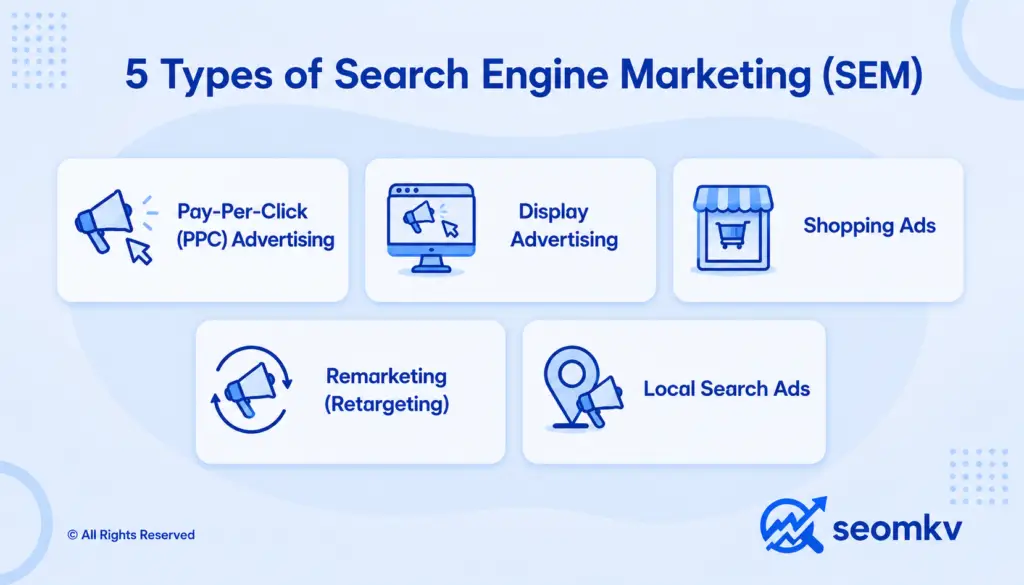
SEM is broader than plain search text ads. Different formats answer different buyer needs and appear across different ad placements. Choose the mix that matches both your offerings and where your audience is searching.
1. Pay-Per-Click (PPC) Advertising
PPC campaigns charge only when someone clicks, which makes testing different ad copy and keywords efficient. A thoughtful max bid and well-structured ad groups help you compete for high-value search terms without overspending.
2. Display Advertising
Display ads appear across other sites and use contextual targeting to reach audiences browsing relevant content. Display works well for brand awareness and for remarketing visitors who didn’t convert the first time.
3. Shopping Ads
Shopping ads show product images, prices, and merchant details right in search results. They shorten the path from search to purchase for e-commerce businesses and improve click relevance for product-driven queries.
4. Remarketing (Retargeting)
Remarketing targets people who already visited your site with tailored ads across the web. It’s a way to bring warm prospects back to a landing page and raise the chance of turning interest into conversion.
5. Local Search Ads
Local search ads appear for searches with local intent and can drive foot traffic via map placements and local extensions. They’re essential for businesses that rely on nearby customers and immediate visits.
Four Key Components of a Successful SEM Strategy
A strong SEM program stitches together the right keywords, compelling creative, optimized landing pages, and a relentless cycle of measurement. Those pieces make paid search both efficient and scalable.
1. Keyword Research and Selection
Start by identifying the right keywords for your market. Target terms with clear intent and enough search volume to matter. Use negative keywords to filter irrelevant search terms and protect budget from low-value clicks.
2. Crafting Effective Ad Copy
Ad copy should match the searcher’s intent and be written for humans, not robots. Use emotional triggers where appropriate, test different headlines, and lean on ad extensions to give users reasons to click.
3. Landing Page Optimization
Send clicks to a landing page that mirrors the ad’s promise. Fast load times, clear calls to action, and relevant content improve conversions and quality score – which in turn lowers cost per click over time.
4. Monitoring and Optimization
SEM is iterative. Watch quality score, ad rank, and conversion data. Try automated bidding where it makes sense, but pair automation with human oversight to catch shifting trends and opportunities.
Search Engine Marketing (SEM) vs Search Engine Optimization (SEO)
SEM buys immediate visibility on search results, while SEO builds organic presence over time. Paid search is precise, controllable, and measurable; SEO earns trust and delivers sustainable traffic. Most smart marketing plans use both — paid listings to capture demand now and organic strategies to reduce long-term acquisition costs.
SEM relies on creating excellent ad campaigns that drive traffic to your website almost instantly, while SEO is about harvesting the fruits from organic search results. Both have the same online marketing goal, but use different marketing efforts. An experienced SEO and internet marketing company can help you strike the right balance between these two approaches, leveraging their strengths to achieve your business goals.
Ready To Work on Your Own SEM Strategy?
If you’re doing this for the first time, it’s best to start small. Do a little research and find the specific keywords that seem the most valuable for your business. See which ones are making conversions and drive the most traffic, and push these first.
This way, you will not spend a fortune without knowing what exactly you’re doing, and you will see how SEM works in reality. Run campaigns and monitor the analytics. Test your actions and see which ones are the most successful.
FAQs
How long does it take to see results from SEM campaigns?
This is the best thing about SEM compared to standard SEO. Results from the first one are visible almost immediately. Once the ads go live, you can see traffic coming to your page. Conversions might come a bit later, depending on the offer, but this is not a rule.
Can SEM work with a small budget?
Yes. There are ads that are highly affordable, and if you make the right keyword selection, you can gain great value from your search engine visibility campaigns. Prioritize the search terms that bring in the most value and gain more for spending less.
What industries benefit the most from Search Engine Marketing?
The industries that rely on e-commerce and online sales. For example, most hotel bookings are made online, so SEM is perfect for them. Online retailers also benefit because their business is positioned this way.
Do SEM campaigns require ongoing management?
They do. Market conditions, competitor bids, and search trends shift constantly. Ongoing management keeps your account structure, bidding strategy, and ad copy aligned with performance goals.
Can Search Engine Marketing be integrated with other digital marketing strategies?
Not only can they, but they should be integrated with other strategies. SEM is an excellent addition to your SEO strategies and complements your email and content marketing. The insights you gather from your search engine marketing are invaluable for all other channels.
How do companies balance SEM and SEO?
Most of them use both, but activate SEM in moments when they need it the most. SEO is an ongoing and more affordable process with postponed benefits, while SEM provides immediate results, but is more expensive. That’s why smart companies use them both.
How does SEM compare to other advertising costs?
There’s no better channel for getting traffic. Search engine marketing is the ultimate tool when you need immediate results, but it does come with a price. Other channels are often equally expensive without providing the required ROI, while others might be more affordable, but also without showing the results you want.