Keyword Research for SEO is like finding the right words people use when searching online. It helps us understand what topics or questions matter to our audience. Why is this important? Because it gives us a way to show up when people look for answers.
At Visibility SEO, we focus on picking the best keywords that match what our audience cares about. This isn’t just guessing; it’s strategy. We look at what people are searching for, spy on what’s trending, and use keyword tools to guide us. Planning well here means we’re one step closer to getting noticed.
What Is Keyword Research for SEO?
SEO keyword research is the process of finding the words and phrases people type into search engines when looking for something. These are called search queries or keywords.
Why does this matter? Because if we know what people are searching for, we can use those words on our website. This helps search engines like Google match our site to what people need. It’s like using a map to guide people to the right answers.
At seomkv SEO, we dig deep to choose relevant keywords that match what they’re looking for. For example, we worked with a small tech store that wanted to get noticed online.
By focusing on phrases like “affordable laptops for students” or “best gaming accessories,” we helped their website show up when people searched for these terms. It works because we’re not just guessing. We’re listening, learning, and giving people exactly what they need.
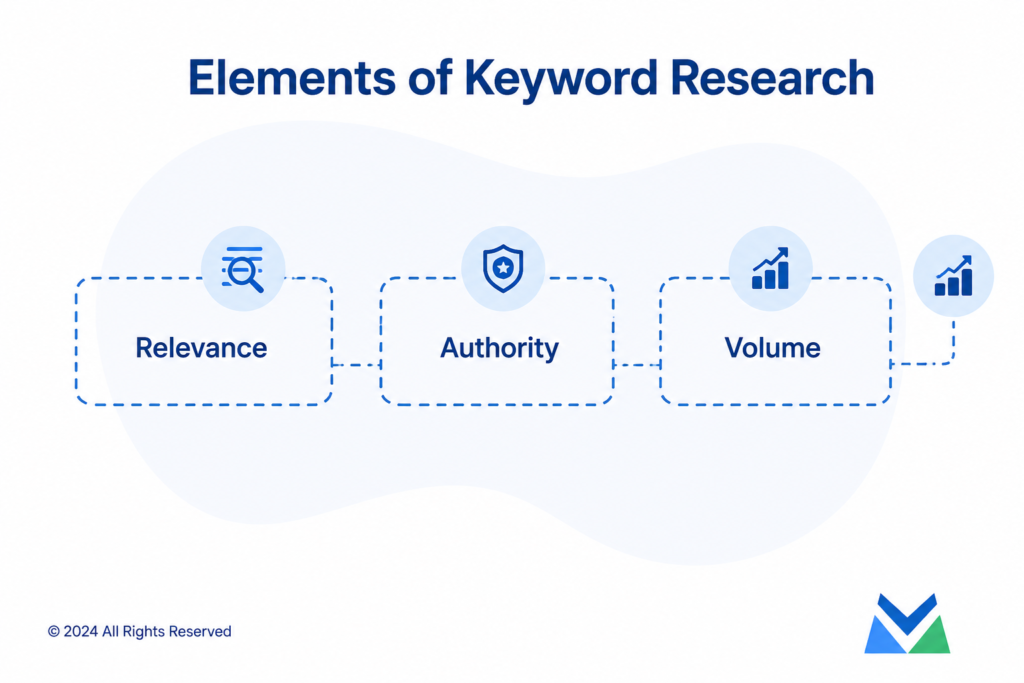
Elements of Keywords Research
When you’re doing keyword research, there are a few key things that make a keyword worth using. Knowing what these are helps you pick the right ones for your site. Let’s break it down.
1. Relevance
Does the keyword match what your audience needs? It’s not just about traffic. A keyword is useless if it brings people to your site who don’t care about your product or content. Stick to keywords that show what your content offers and how it helps.
2. Authority
Can you show that you know your stuff? People trust content from brands or sites that seem reliable and experienced. That’s why we, at Visibility SEO, always work hard to prove our expertise. For example, when we write about SEO tips, we include actual results we’ve achieved for our clients.
3. Volume
High search volume can mean more competition. Low search volume might not bring enough visitors. The sweet spot is somewhere in the middle. Keywords with medium search volume are often the best choice. They bring steady traffic without being too competitive.
3 Practical Uses of Keyword Search Volume to Bring in Quality Traffic
Keyword research isn’t just about being #1 on Google. It’s about bringing in the right people—those who are interested in what you offer. Here’s how to use search volume to your advantage.
Analyze Competitor Keywords

If you’re wondering why competitors rank higher than you, look at their keywords! Keyword research tools like SEMrush or Ahrefs can help you see what they’re targeting. Use their ideas to improve your own content, but make it better. Add tips, answer common questions, or explain things in more detail. Aim to stand out.
Use Long-Tail Keywords

Long-tail keywords might not get as many searches as short words, but they bring in people who know exactly what they want. These people are more likely to stay, read, and even buy. We once helped a small bookstore improve their website traffic. Instead of just focusing on “books,” we used long-tail keywords like “best mystery books for teens” and “affordable used fantasy novels.” They saw a big jump in visitors who loved what they found. Long-tail keywords help you connect with the right audience—those who are truly interested in what you offer.
Monitor and Analyze Your Results

Your work isn’t done once your content is live. Watch how your keywords perform using free keyword tools like Google Analytics. Are people finding your site? If not, adjust your content or try targeting different keywords. Keep checking in and improving. It’s the only way to stay on top.
Factors That Influence Google Keyword Search Volume
Not all keywords work the same way. How often people search for them can change based on outside factors. Here are four big things that can affect keyword popularity.
Seasonality
Some keywords are hot only during certain times of the year. Think about it: how often do you search for “Christmas gift ideas” in July? Probably never. But come November and December, everyone’s looking for the perfect present. That’s why it’s so important to focus on seasonal keywords at the right time. If you miss the window, you miss the chance to show up in searches when it matters most.
Trending Topics

Trends are like waves: you’ve got to catch them early. When something blows up, people rush to search for it. For example, when a new social media challenge goes viral, related keywords skyrocket in searches. Free keyword tools like Google Trends can show you what’s trending right now. Spot the trend, act fast, and create content before everyone else does.
Industry Growth
When an industry grows, so does the interest in it. Just look at plant-based diets. A few years ago, only a small group of people were searching for “vegan proteins.” Now, as more people get into plant-based eating, those keywords are everywhere. If your business is in a booming industry, pay attention. Keywords tied to that growth will only get bigger.
Local Modifiers

Ever searched for “pizza near me” or “plumbers in Miami”? That’s what local keywords are all about. They change depending on where people are and what they need. A small business in one city might rely on these keywords more than anything else. If your business serves a specific area, targeting local keywords is a must. This is because people in your neighborhood are looking for you; they just need to find you.
The way keywords behave isn’t random. By understanding what affects them, you can use this knowledge to make smarter decisions and get the most out of your SEO efforts.
How to Find the Right Keywords for Your SEO Strategy
The secret to successful keyword research is a structured and thoughtful approach. Here’s how you can start building your keyword list.
Start by Identifying Key Topics That Matter to Your Business

Think about what your business is all about. What do you sell, and who are you selling it to? For example, at Visibility SEO, we focus on topics like “simple SEO tips” or “better search rankings.” These are things our audience cares about. Stick to areas that make sense for your business and customers.
Add Keywords to Each Topic
Once you know your main topics, list out words or phrases that fit under them. If your topic is “SEO tips,” think about keywords like “how to improve SEO” or “SEO for beginners.” These will help keep your content focused.
Consider User Intend Behind Each Search Term

Think about what people want when they search online. What are they trying to learn or fix? Many searches are full sentences, like “How do I bake bread at home?” or “Easy SEO tips.” These searches tell you what they need. Pay attention to common phrases they use. Add those to your ideas. If you know what they’re looking for, you can make content that actually helps. It’s like speaking their language. Focus on what matters and let their words guide you.
Look Into Related Keywords
Type your main keyword into Google and scroll down to “related searches.” These phrases give you more ideas for what people are searching for. It’s an easy way to find common search terms you might’ve missed.
Use Keyword Tools to Gather Data

Sometimes, you need more than a guess. Tools like Google Keyword Planner or SEMrush show how often people search for a word and how hard it is to rank for. For example, we use these tools to make sure we’re focusing on the right phrases. It’s like having a map for your content.
Look for Medium Search Volume & Low-Competition Keywords Research

Here’s the trick: don’t always go for the most popular keywords. The ones everyone uses are harder to rank for, especially if your website is new. Instead, focus on medium search volume (keywords people search often enough but aren’t overly competitive). Here’s how different search volumes work:
Low Search Volume
These are super niche. They don’t bring in a lot of traffic but are great for reaching a specific audience. If your topic is “running gear,” a low-volume keyword could be “best socks for marathon runners.” It’s specific, and you’ll have a better shot at ranking.
Medium Search Volume
This is the sweet spot. Keywords with medium search volume strike a balance. They bring in decent traffic without being impossible to rank for. For example, “beginner running tips” might not have the highest traffic but still gets searched often enough to matter.
High Search Volume
These are the big ones, like “best running shoes.” They’ll bring in tons of traffic but are highly competitive. You’ll need a well-established website to rank for these.
Very High Search Volume
Think of these as the Mount Everest of keywords. Phrases like “shoes” or “exercise” get searched millions of times. If your site is new, don’t waste time trying to rank for these. Start small and aim higher later.
Keep it simple, stay focused, and you’ll see results!
Evaluate the Metrics to Find Relevant Keywords
When picking the best keywords for your SEO strategy, it’s important to look at the right metrics. These numbers help you see what works and what doesn’t. Here’s what to check:
- Search Volume:
How popular is this keyword? Search volume shows how many people type it into Google. A high number means more potential traffic, but is it the right audience?
- Keyword Difficulty:
This tells you how hard it is to rank for a keyword. If it’s too competitive, you might want to pick something easier to target first.
- Country:
Where are the searches coming from? If your business focuses on a specific country, make sure the keyword matches what people there are searching for.
Choose the Best Keyword Research Tool for Your SEO Goals
SEMrush

SEMrush is like a secret weapon for finding the right words to use online. It helps you figure out what people are searching for and shows you how to use those words to get noticed. Businesses use it to understand trends, track competitors, and pick better keywords. If you want to stand out online, SEMrush is one tool that can make that happen. It’s powerful, easy to use, and helps you grow your website traffic.
Google Keyword Planner (GKP)

Ever wonder how Google knows what to show you? Google Keyword Planner gives you the inside scoop. It helps you find the right words (keywords) to get your site found online. Whether you’re doing a school project or starting a business, GKP can help you pick words people are already searching. Plus, it’s free!
Moz Keyword Research Tool

Moz is all about making things simple and smart. Their keyword research tool helps you find keywords that matter, ones with less competition and more chances of people clicking. It even tells you how hard it might be to rank for certain words. If you’re looking for a tool that’s smart but easy to handle, Moz is a great pick for beginners and experts alike.
Ahrefs

Ahrefs is like a map for finding treasure online. It shows you which keywords are helping websites get traffic and even gives you ideas for your own. Ahrefs also helps you understand links, which are super important for ranking in search engines. Yes, it’s a little advanced, but once you get the hang of it, it’s a game-changer.
Serpstat

Serpstat is an all-in-one tool that helps you grow your online presence. Whether you need keyword ideas, want to spy on competitors, or trying to fix problems on your site, Serpstat is a good choice. If you’re serious about improving your online game, this tool is worth checking out.
Sistrix

Sistrix is all about data and details. It helps you see which keywords are working and which ones aren’t. It’s especially good for tracking how websites perform over time. Whether you want to know how your blog is doing or maybe see how a competitor is ranking, Sistrix gives you all the numbers you need. It’s straightforward, reliable, and great for digging deeper into keyword research.
Mangools

Mangools is a fun and friendly tool for keyword research. It’s perfect for beginners who want something simple but effective. Mangools helps you find the best keywords, check out your competition, and even track your progress. It’s super easy to use and doesn’t overwhelm you with too much information. If you’re just starting out, Mangools is a great first step into keyword tools.
3 Common Keyword Research Problems (and Solutions)
Keyword research can be tricky sometimes. Let’s talk about three common problems and, more importantly, how you can fix them.
1. Inconsistent Search Volume Data Between Tools
Different keyword tools often show different search numbers. One tool might say a keyword gets 1,000 searches a month, while another says 500. No tool is perfect. Instead of stressing over exact numbers, look at the overall trend. Is the keyword going up in popularity or staying steady? That’s what really matters. And if you can, compare data from a few tools to get a better picture.
2. Popular Keywords Are Too Difficult to Rank For
Popular keywords can be super hard to rank for. Everyone is trying to use them: large companies, big websites, and even experts with years of experience.
When we at Visibility SEO see a popular keyword like “best running shoes,” we know it’s going to take a ton of work to rank high. It’s like trying to win a race against Olympic runners.
Instead, we pick smaller, easier battles. We look for “low-hanging fruit,” keywords that fewer people are trying to rank for, like “best running shoes for beginners” or “comfortable running shoes for flat feet.”
Those are more specific, and they still bring good traffic. Start small and build up from there. It’s all about being smart with your strategy, not chasing what’s impossible.
3. Keywords Drive Traffic but Don’t Lead to Conversions
Getting traffic is great. If that traffic doesn’t turn into sales, sign-ups, or whatever your goal is, that’s a problem. Usually, it means the people coming to your site aren’t the ones you actually want. Maybe your keywords are too broad, or maybe they’re attracting the wrong audience. Take a step back. What does your ideal visitor need? What are they really searching for? Once you figure that out, tweak your keywords and content to match their intent. The right audience is out there, you just need to make sure they can find you!
Benefits of Keyword Research
- Gain Insights into Market Trends

Keyword research helps you spot trends before they explode. It’s like having a crystal ball for your market. If you know what people are searching for, you can create content they actually care about. That’s how you stay ahead of your competition.
- See Traffic Growth

When you choose words people are already searching for, they’ll find your site faster. This means more visitors, and not just random ones—people who actually want what you’re offering. Consistent traffic can help your site grow steadily over time.
- Enhance Your Customer Acquisition Strategy

What if you could attract visitors who are ready to buy? That’s the power of targeted keywords. They help you reach the right audience—people looking for exactly what you’re selling. These visitors are more likely to stick around, trust your brand, and maybe even become loyal customers.
Why You Need a Keyword Research Service for SEO Success
Keyword research doesn’t have to be so hard. I know it can feel like too much, especially when there’s already so much on your plate. But missing out on the right keywords means missing out on people who are searching for what you offer. That’s where we step in. Our keyword research service finds those golden opportunities you might overlook. We dig deep, find the best keywords, and give you clear insights to boost your SEO strategy. Get in touch today and let us help you get seen.
FAQs
What is an example of keyword research?
Keyword research is the process of finding and analyzing the specific search terms people type into engines like Google. It helps you understand your audience’s language so you can create content they actually want to find.
What are the 4 types of keywords?
Keywords are typically categorized into four main types based on the user’s search intent: informational, navigational, commercial, and transactional. These define exactly what the searcher is trying to achieve, from researching a topic to making a final purchase.
What are basic keywords?
Keywords are specific words or phrases that signify a topic’s core idea. Depending on the context, they function differently
What is a good keyword?
A good keyword is one that connects with your audience and what they’re searching for. It should be relevant to your topic, easy to understand, and match what people want to know or solve. The best keywords have medium search volume: enough people are looking for them, but not so many that they’re impossible to rank for. Low competition is key too.
Can you use AI chatbots for keyword research?
Absolutely, but don’t rely on them alone. AI chatbots like ChatGPT can give you ideas for keywords or even help organize your thoughts. They’re quick and helpful for brainstorming. But AI isn’t perfect. It’s best to use them alongside proper keyword research tools. Think of chatbots as your helper, not the main tool in your kit.
How often should you do keyword research?
Every 3 to 6 months is a good rule of thumb because things change. People’s search habits, trending topics, and even your competition can shift. If you don’t refresh your keywords, your content might stop being relevant. So, set a reminder and check in regularly.
Why should I do keyword research for search engine optimization?
If you want people to find your content online, keyword research is a must. It helps you figure out what your audience is searching for so you can create content that matches their needs. When you use the right keywords, your content ranks higher on search engines visibility. That means more people visit your site, which can lead to more growth, sales, or whatever goal you have. Skipping keyword research is like throwing darts blindfolded.
Can a free keyword research tool help you identify long-tail keywords?
Yes, and they’re actually pretty good at it. Free tools like Google Keyword Planner can give you tons of keyword suggestions, including those long-tail keywords. Long-tail keywords are longer, more specific phrases like “best running shoes for beginners” instead of just “running shoes.” These are easier to rank for and often bring in people who know exactly what they want. Free keyword research tools may not have all the bells and whistles, but they get the job done.