If you have clicked a link and landed on a page that shows a What Is a 404 Error Code, you know that annoying feeling. An error message just means that the page you wanted cannot be found. This happens on many websites. It usually means that the page was deleted, the URL was mistyped, or a broken link is pointing there. Website owners face this issue as well. The good news is that once you know why it happens, you’ll most likely be able to fix it.
What Is a 404 Error Code?
A 404 error page is shown when a website’s server is not able to find the page requested by the user. It is classified as a client error because the error is the user’s request, not an error with the server. This can occur if data was deleted or if there was an old reference URL that was updated. As an example, if a link we find in search results points to a page that does not exist, it is likely that our browser displays this page in this format. Search engines like Google into consideration with this error code as well. Too many of these can negatively impact a site’s rankings.
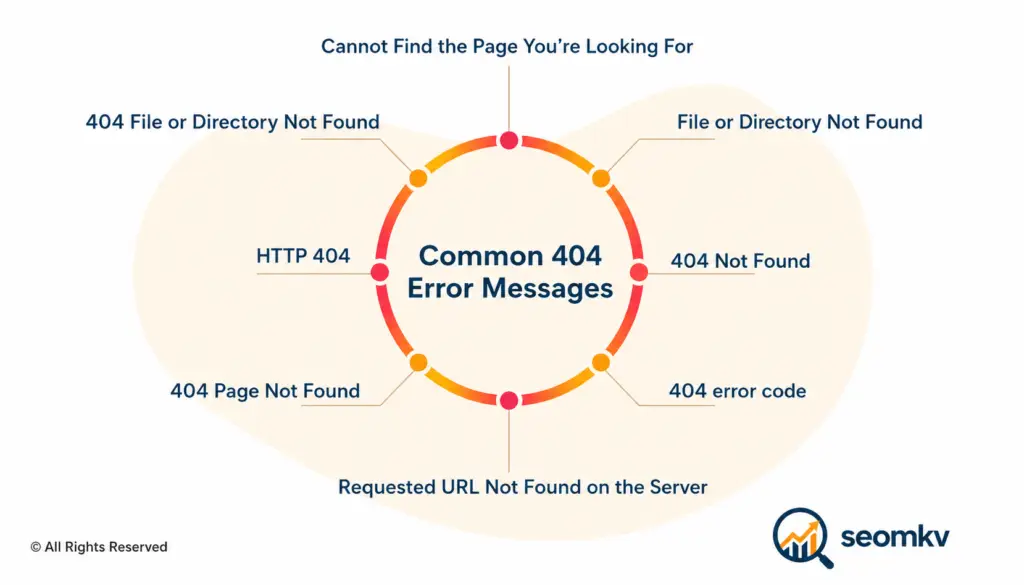
Common 404 Error Messages
A 404 error can appear in many different formats depending on the website or server configuration. While the wording may change, they all mean the same thing: the requested page could not be found. Here are the most common variations you might see:
- HTTP 404
- Cannot Find the Page You’re Looking For
- Requested URL Not Found on the Server
- 404 File or Directory Not Found
- 404 Page Not Found
- 404 Not Found
- File or Directory Not Found
- 404 error code
8 Common Causes of 404 Status Code
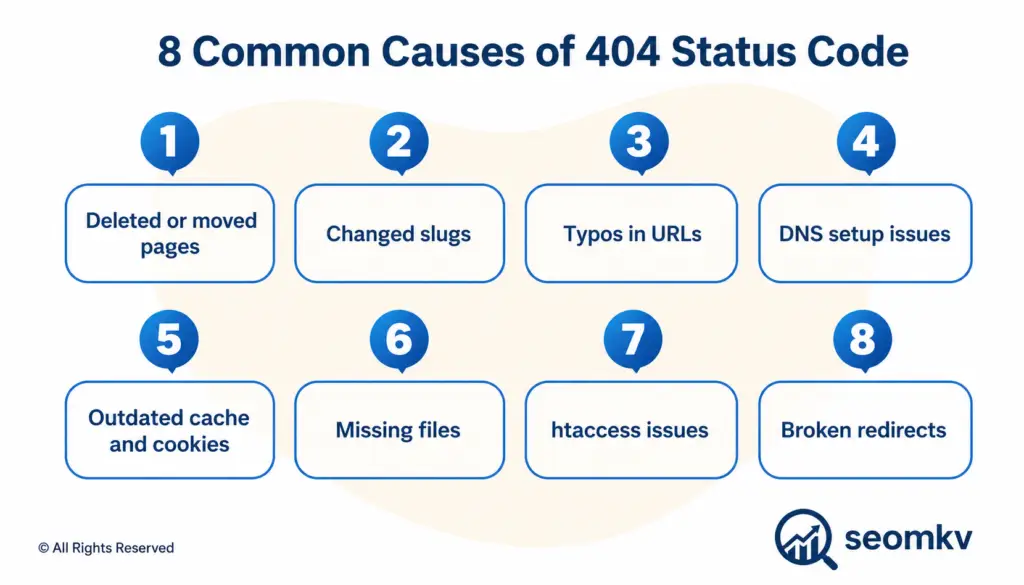
A 404 error page can appear for many reasons. Most causes are small, but when left unchecked, they create a poor user experience. Below are the most common causes of the 404 status code.
- Deleted or moved pages: When a page is deleted but links still exist, the server will show a 404 error message. Many websites remove old content but forget to redirect the old URL. The page is gone, but users keep trying to access it through search results or other websites. This is one of the easiest causes to prevent with simple redirects.
- Changed slugs: The slug is the part of the URL that comes after the domain name. When a website owner changes the slug, the original URL breaks. For example, contact-us might change to contact. Without a redirect, the user lands on a 404 page. Small changes like this break internal links and external links across the site.
- Typos in URLs: Sometimes the error comes from a simple typing mistake. A user attempts to enter a URL but misses a letter. The server cannot find the requested page and instead shows a client error. Even a single missing character in the HTML code creates this problem. Website owners can help by creating an error page with a search bar so users can try again.
- DNS setup issues: If DNS settings are wrong, the server cannot direct the request to the right place. The result is a 404 status code. The issue is not the page itself but configuration errors in the setup. Fixing it often means checking the server or .htaccess file for errors.
- Outdated cache and cookies: In some cases, the user’s browser is the problem. Outdated cache or cookie data may point to a page that no longer exists. When the browser tries to open it, the server sends an error code. Refreshing the page or clearing the cache usually solves the issue.
- Missing files: Sometimes links on a website still point to images, scripts, or other files that were deleted. When the server cannot deliver the file, a 404 error page shows up. This often happens after redesigns. Website owners should double-check that all HTML and media files still exist after updates.
- htaccess issues: The .htaccess file tells the server how to handle requests. If there is a mistake in this file, working links may suddenly show 404 error code messages. Website owners should back up the file before making edits so they can avoid major problems.
- Broken redirects: Redirects should send users from an old URL to a new URL. When they are set up incorrectly, they can point to deleted pages and cause error pages anyway. This not only frustrates users but also creates a poor user experience.
How Users Can Fix a 404 Error?
Running into a 404 error page can be frustrating. Before giving up on the data you want, try these steps. They can often solve the issue and get you back to the correct page.
- Double-check the URL for typos: Always check the URL in the search bar. A small mistake in HTML letters or numbers can cause a 404 error code. Correcting the typo may take you straight to the page.
- Refresh the webpage: Sometimes the server has a temporary issue. Refreshing the page sends a new request to the server. If the problem was a small glitch, the page may load correctly.
- Search the web: If the requested page was moved, you may still find it through search results. Type the page name into Google or another search engine. Many websites keep the same data under a new URL.
- Use another device: At times, the problem comes from the device itself. Try opening the same URL on your phone or another computer. If it works there, clear the cache or cookies on the first device.
- Go to the Internet Archive’s Wayback Machine: If a page no longer exists, try the Wayback Machine. It stores older versions of many websites. Enter the URL, and you might see the deleted page from the past.
- Contact the website: If nothing works, contact the website owners. They may not know the links are broken. A quick message helps them fix the issue and possibly send you the new URL.
How Website Owners Can Fix 404 Errors?
For website owners, fixing 404 errors is important. Broken links hurt both users and search engine optimization. Here are steps that can help keep a site healthy.
Configuring redirects (301)
If a page no longer exists, set up a 301 redirect to a new URL. This tells search engines the page has moved. Users will not see a 404 error page and will be taken to the right place.
Using plugins to find 404 errors
Platforms like WordPress offer plugins that scan for broken links. They can show every 404 error code on the site. This makes it easy to fix problems before they affect users.
Updating internal links to relevant pages
Check your site’s internal links. If they point to old URLs, update them to the right pages. This prevents visitors from landing on errors when moving through the site.
Checking server and hosting settings
Sometimes configuration errors in hosting cause 404 issues. Review your control panel or .htaccess file. Correcting mistakes here can restore access to the missing page.
Monitoring & Preventing 404 Errors
Website owners should not wait for users to complain. Regular checks keep errors from building up. Here are useful ways to monitor them:

- Use Google Search Console: Google Search Console is free and shows which URLs return a 404 error code. It reveals how search engines view your site and helps protect your site’s ranking.
- Check your server logs: Server logs record every request. They help find which links cause 404 errors. If the same old URL appears often, users are still trying to access deleted data.
- Open your browser’s developer tools: Browsers have developer tools that show the status code for each request. You can see 404 errors appear in real time as you test your site.
- Try crawling tools: Crawling tools scan a website the way search engines do. They reveal broken links and hidden errors. Running them often saves time and improves maintenance.
- Manually test URLs: Click through your own links to test them. Manual testing may reveal error pages that no tool reports. It takes time but gives insight into the user experience.
- Checking External Links: Other websites may still use an old URL to link to your content. If that page no longer exists, visitors will see a broken link. Contacting the site owner or setting up redirects ensures your data remains accessible.
- Set up the right redirects: Whenever you delete or move a page, create a redirect to the new URL. A correct 301 redirect prevents client errors and keeps your site’s ranking safe.
The Difference Between Hard 404 and Soft 404
Not all 404 errors are the same. Search engines treat them differently depending on the response code and the message shown.
Hard 404 Status Code
A hard 404 is a real error. The server replies with the official 404 response code and an error page. It happens when:
- A deleted page: The page no longer exists, and the server gives the correct error code.
- A mistyped URL: If a user enters the wrong URL, the server cannot match it.
- A page that was never created: Sometimes the URL points to nothing at all, leaving only a client error.
Soft 404 Status Code
A soft 404 looks like a missing page but does not send the real 404 response code. Instead, the server gives a custom error but still shows a “200 OK” code. Search engines find this confusing because the page no longer exists, but the server says it is fine. Soft 404s harm search engine optimization because they waste crawl data. They are often fixed by adjusting server settings or editing the .htaccess file.
Why Fixing 404 Errors is Crucial for SEO?
404 errors do more than annoy users. They directly affect seo and site performance. Fixing them strengthens a website in many ways.
Improved Speed
A site with fewer broken links loads faster. The server does not waste time serving error pages. Search engines favor websites with better speed, and users enjoy a smoother visit.
Improved Scalability
A site free of 404 errors is easier to expand. Internal links work properly, so new HTML pages and URL paths can be added without confusion. Search engines crawl the site more efficiently.
Reducing Dynamic Requests
Each 404 error page adds unnecessary requests between the browser and the server. Removing them means fewer wasted actions. Clean links improve the site for both users and search engines.
FAQs
Is the 404 error message my fault?
Not always. The requested page may have been deleted or moved, or the URL may have a small mistake. Users can check for typos in the search bar. If the page truly no longer exists, then it is up to website owners to fix links or redirect users to a new URL.
Why is the 404 error page famous?
The 404 error page is well known because it is one of the most common client error messages on the web. Many websites design creative versions to make the poor user experience less frustrating. Still, the meaning stays simple: the requested page does not exist anymore.
Is Error 404 temporary?
Sometimes yes, sometimes no. If the problem comes from configuration errors or a missing file, it can be fixed quickly. But if the page was deleted and no longer exists, the error page will remain until a redirect or new URL is created.
How do 404 errors affect my website’s search engine ranking?
Too many 404 errors tell search engines your site is not managed well. Crawlers waste data on pages that no longer exist. Over time, this lowers the site’s ranking. Fixing broken links, updating internal links, and using Google Search Console can reduce damage and improve search engine optimization.
What are the best tools to fix the 404 response code?
The most reliable tools are Google Search Console, crawling tools, and plugins for platforms like WordPress. These scan for broken links and error pages. Server logs and the .htaccess file also help reveal configuration errors. Together, they give website owners the ability to keep a site working and accessible.