Best backlink checker tool ever wonder why certain websites outpace you in search results? Often, it comes down to backlinks—the sites that vouch for yours. A best backlink checker tool helps you keep tabs on those connections. By watching your referring domains and judging the links’ worth, you get a jump on rivals. Don’t overlook free backlinks, keep tabs on nofollow links, and test a free backlink checker tool so you know your strengths and what needs work.
A tidy backlink profile puts you in a stronger spot. Using a backlink analysis tool uncovers valuable backlinks, something a basic free backlink tool can’t always manage, especially when you need a competitor backlink comparison or want to lift your domain authority. So, why are backlinks a focus for so many? Easy – they prove your site’s value in search engines’ eyes and reveal link-building opportunities you’d miss otherwise. It isn’t magic. But it really does the trick.
Eventually, SEOs caught on and started doing what they can to inflate their websites’ perceived authority through various link building tactics. A core part of a link building or off-page SEO strategy is backlink analysis, and to do that, one ought to work smarter using the right tools like a best backlink checker.
What is a best backlink checker tool?
When you use a backlink checker, you’re discovering exactly which sites are pointing their links to you. These external signals matter a lot to all the main search engines. A proper backlink checker tool shows you not just how many sites link to you, but also what stands out: are they quality sites or something fishy? Most tools offer reports so you can clean up bad links and spot what supports your rankings. You’ll see at a glance if you’re making headway, or if it’s time to rethink your approach.
Why do Backlinks Matter?
A backlink is a bit like a personal introduction – one website telling users (or search engines) that you’re worth a look. Google, Bing, and others treat these endorsements as signals for trust. For instance, if a respected news outlet points a link your way, your domain authority gets a tick up. But a sketchy link from a tiny, off-topic blog? That could drag you down. In SEO, backlinks are one of the top reasons search engines decide who shows up first and who gets left out. The source really counts.
Benefits of Using a best backlink checker tool
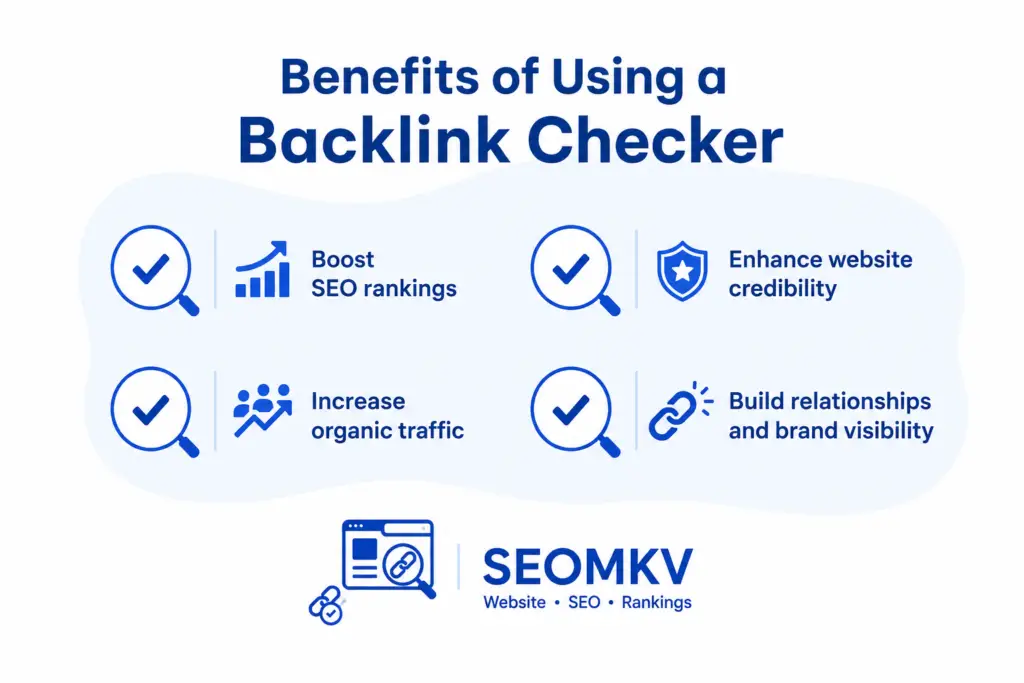
Thinking about why you’d bother with a backlink checker tool? There are several reasons, each with clear pay-offs.
- Boost SEO rankings: Every backlink acts like a signpost for search engines. Using a backlink checker, you discover which links cheer you on and which ones might be holding your site back. If you check regularly, you’ll know where your backlink profile stands, letting you shape and improve your bank of high-quality backlinks. Do this and, over time, your place in search results should edge higher. Your SEO Writing plans benefit the more you stay on top.
- Increase organic traffic: Loads of visitors arrive because someone else sent them your way; their click starts on another site, which is known as referral traffic. A backlink checker tracks which of your links attract true visitors. This knowledge lets you steer your link-building energy toward what gets real results, not just empty numbers. In my experience, a few good links often bring more new visitors than any paid ad can.
- Enhance website credibility: Wouldn’t you put more faith in a website backed by top brands or well-known bloggers? Most people (and Google) think like that, too. Backlink checkers show you where your best mentions come from. They also spotlight weak or dodgy ones. By making sure your backlink profile only keeps top-notch links and drops the questionable ones, you help your reputation and keep search engines happy.
- Build relationships and brand visibility: Sometimes, spotting a backlink is the start of a new partnership or conversation. A backlink checker can reveal who’s already talking about you. With that list, you can reach out, swap ideas, or suggest updates and collaborations. Bit by bit, this approach forges stronger networks, gets your name in more places, and uncovers extra link-building opportunities as your reputation spreads. Over time, these small steps really boost your brand.
What Is Considered a Good Backlink?
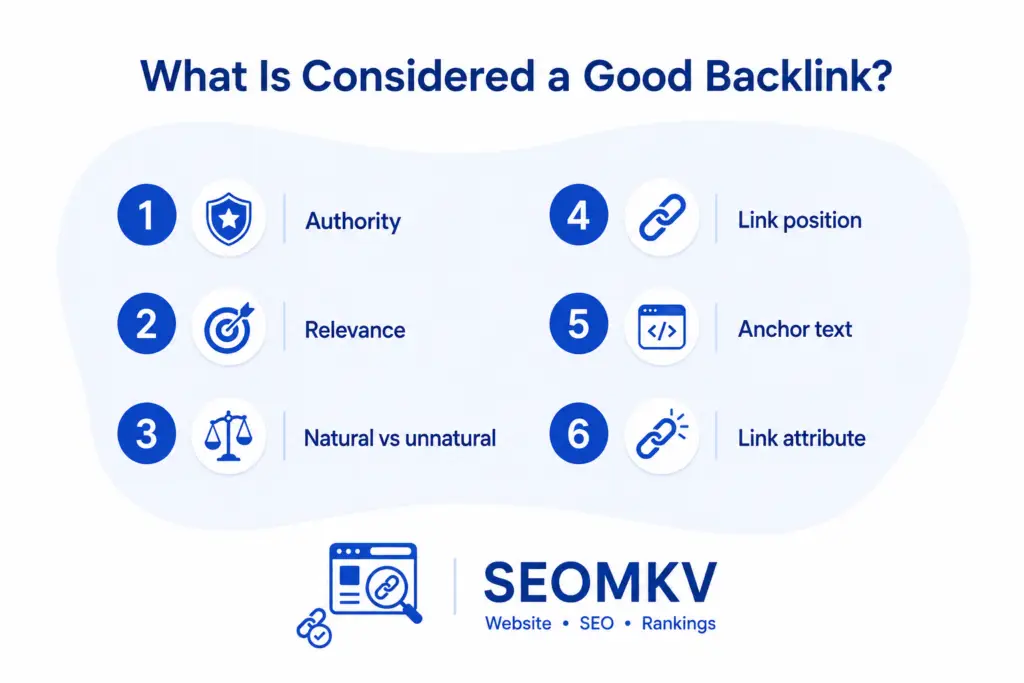
Not all backlinks are built the same; knowing which ones matter makes a world of difference. Here’s how to spot the ones that count.
- Authority: When you land a backlink from a website with strong domain authority (or a high domain rating), you get more of a boost. It’s like a trusted expert vouching for you. Those links transfer more value and tell search engines you’re worth trusting as well. On the other hand, a handful of weak links won’t do you any favours.
- Relevance: If links come from sites in your field, they carry extra weight. For example, being featured on a food blog if you write about recipes means a lot more than a link from a tech forum. These relevant connections show search engines that you cover your topic well. They add up to a more convincing profile.
- Natural vs unnatural: Natural backlinks are the gold-star links – you earn them because your content appeals to others. On the flip side, if you get links through quick schemes or spammy tactics, those unnatural links can land you in trouble with search engines. From what I’ve seen, quality always trumps shortcuts. Go natural and you’ll stay on track.
- Link position: Where a link shows up matters, too. A backlink in the main text of an article usually helps more than one buried in the footer or sidebar. Readers notice links in prime spots, and so do search engines. Those in-content links send a positive signal that someone truly rates your material.
- Anchor text: Anchor text (the clickable words forming a link) tells search engines what your page is about. Using clear, honest phrases (“easy dinner ideas” beats “click here”) helps. Still, using the same anchor text over and over can look suspicious, so stay varied and natural when you can.
- Link attribute: Some links have extra instructions, like ‘nofollow’ or ‘dofollow’. Nofollow ones don’t hand much ranking power over, but might still send good referral traffic. Dofollow links are valuable because they boost your SEO. Whichever you get, a strong backlink checker tool helps you keep tabs on what’s in your mix.
6 Tools That Let You Analyse Backlinks For Free
Exploring your backlinks doesn’t have to break the bank. Plenty of free options give useful insights about your links. Here are some to check out or try a few and see which fits.
1. SE Ranking
SE Ranking’s free backlink checker tool is quick to scan and simple to use. See which links you’ve won, what text they use, and spot which domains send them. You can even tell if anything was lost or looks like spam. It comes with a bonus: you can line up your site’s results next to a competitor, making it easier to spot gaps or discover what you’re doing better.
2. Ahrefs Backlink Checker
Ahrefs is big in the SEO world. Even the free version lets you view your most common backlinks, top referring domains, and the most-linked pages. You don’t get every last detail, but it’s enough to spot strengths and missed opportunities. What’s handy here is their regular updates, so reports never stay stale for long.
3. Linkody
Linkody is geared towards keeping a running watch on your links: old, new, or lost. Find out how your anchor text is used and sort by nofollow/dofollow types. It also lets you track what competitors are landing. That bit often sparks ideas for how to win a few of those links for yourself.
4. SEOmator
importance of keywords in seo keeps backlink audits simple. Highlight any cause for worry: spammy links or odd anchor words. The tool also makes it easy to check link attributes. Designed for users who don’t want overwhelming detail, its dashboard delivers the must-know metrics without any faff.
5. SEO Review Tools
SEO Review Tools is as simple as it gets: pop in a web address, and you get a list showing backlink count, referring domains, and common anchor texts. It favours speed over depth, making it handy for a quick spot check. We’d say it’s a stepping stone for beginners who want to see the basics.
6. Backlinko
Backlinko isn’t a tool but a learning hub. It offers practical guides about backlink strategy, earning top backlinks, and finding new link-building opportunities. If you want to really dig into methods that work, their step-by-step help is a solid starting point.
5 Step-by-Step Instructions for Creating a Backlink Analysis
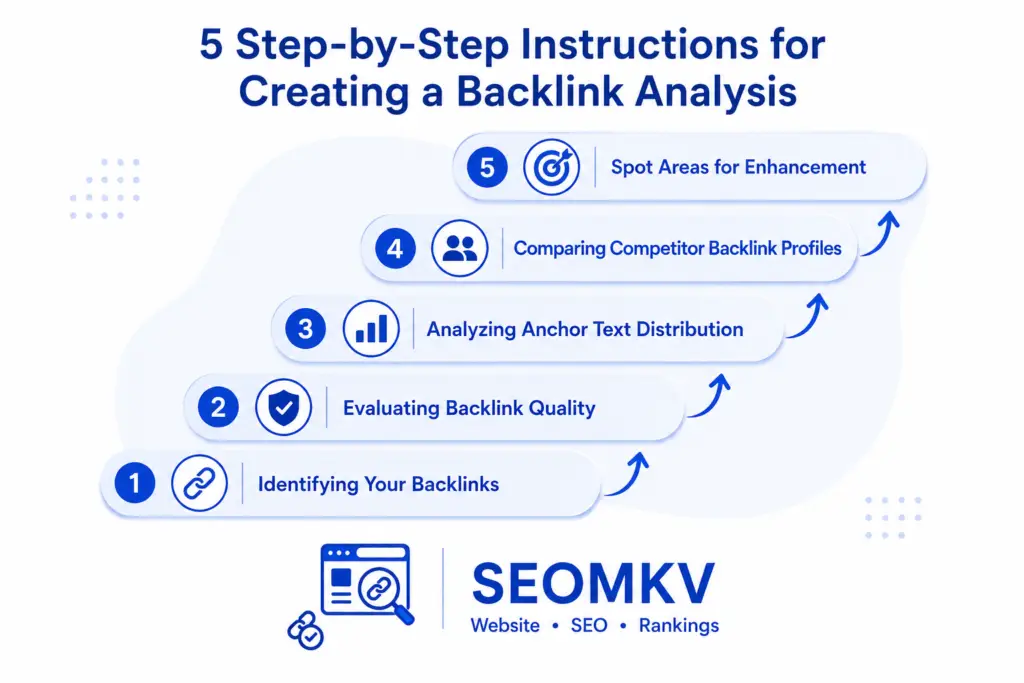
Doing a proper backlink analysis breaks down into a few easy moves. Here’s how we’d tackle it.
Read More: 301 Redirects
1. Identifying Your Backlinks
Get your backlink checker ready. Pull out every link to your site, along with the referring domains. Save that list somewhere clear. As you look, flag any strange domains or sketchy links because they’re the ones you’ll need to fix or prune later. Starting with a complete snapshot always helps you see where you stand.
2. Evaluating Backlink Quality
With your list in hand, check each link out. Does it lead from a solid, trusted site? Does the anchor text look right? Keep your eyes peeled for anything suspicious. Mark weaker or spammy links for cleanup. If you tackle this part thoroughly, you sort out trouble before it hurts your rankings.
3. Analyzing Anchor Text Distribution
Anchor text might not be the star, but it speaks volumes. Use your backlink analysis tool to scan for anchor usage: brand, generic, and Keyword Cannibalization. See if something repeats too much; if so, search engines might get wary. Aim for a mix because that’s what keeps your profile from looking fishy.
4. Comparing Competitor Backlink Profiles
Time to do a bit of sleuthing. Use your checker to see who links to your rivals. What sort of content gets picked up? Are bloggers or magazines doing the linking? Spotting these patterns unlocks clues to what works. If you notice a competitor climbing with the help of a certain kind of backlink, maybe you can pursue something similar.
5. Spot Areas for Enhancement
Finish up by matching your backlink stats against the competition. Spot any weak areas, like repetitive anchor words, fewer referring domains, or a lack of standout links. Jot them down and create a game plan. That could mean pitching new articles, asking for updated links, or patching broken backlinks. Progress is made move by move.
Why It’s Important to Review Your Competitors’ Backlinks?
Watching what your competitors are doing with backlinks? That’s one of the best shortcuts for finding new ideas and outsmarting them; no need to reinvent the wheel.
See what type of content is popular
When you look at the backlinks your rivals earn, it’s clear which content sparks attention. Is it guides, handy videos, or surprising stats? Knowing what gets linked tells you which topics to target for your own future pieces. It beats guessing every time.
See why their content has linked to
It helps to figure out why your competitor’s pages gained those links. Did they give step-by-step help, quote experts, or break big news? This secret sauce gives clues for shaping your own posts so they’re just as tempting for someone to link.
Reverse engineer how their content was linked to
Check the routes your rivals used: outreach, guest blogging, expert roundups? Spot their best moves and you can try them out, too. Very often, what works for them could work for you with the right tweaks.
Strategies for Building a Stronger Backlink Profile
Collecting a bunch of links is fine, but having the right mix is what really powers up your website’s profile.
Disavowing toxic links
First thing on the list: get rid of the bad apples. Identify and remove (or disavow) dodgy or obviously spammy links. A link from a dodgy site acts like rubbish, dragging your score down, not helping it. Cleaning up these weak points keeps your domain authority safe and helps your hard-earned links outshine the junk.
Pursuing high-quality link opportunities
Focus your time on winning backlinks from websites that genuinely fit your topic and offer a solid reputation. Offer good content, and ask to share it, or look for interviews and features. It takes time, but a handful of great links are worth more than dozens of poor ones.
Diversifying your link profile
Don’t forget to shake it up: editorial mentions, a guest post, a couple of nofollow and dofollow links. That kind of mix helps your site look more natural to search engines and less likely to get caught by an algorithm change. A well-rounded profile is a safe bet in the long haul.
Boost Your Ranking with Quality Backlinks
Bringing it all together: whether you use a free backlink checker tool or a paid one, keep an eye on your links. Run fresh backlink analysis so you understand which ones help or hurt. Update your plan as you go, improve what’s weak, and chase new link-building avenues as they open up. Strong backlinks and a varied set make all the difference, and your search rankings will prove it.
FAQs
What features should I look for in a backlink tool?
When it comes to picking a backlink checker, go for one that offers a wide view, not just a big list of links. Look for link quality, anchor text, referring domains, and whether links are nofollow or dofollow. It shouldn’t miss out on spam detection either. Being able to check the competition’s backlinks is a real advantage for finding fresh link ideas.
How do backlinks affect my website’s SERP ranking?
Backlinks work like badges of honour online. Search engines take note when you collect links from trusted websites; it’s a way of telling the web you’re trustworthy. If you have lots of genuine recommendations, you’re likely to climb those search result pages. On the flip side, unhelpful or fake links can drag your site down.
How often should I check my backlink profile?
Aim for a monthly check at the very least, more often if you’re running a big campaign. Quick, regular reviews catch lost or broken links so you can fix them fast. Plus, it’s the easiest way to spot dodgy links and keep your strategy ticking along nicely.
What should I do if I find broken backlinks?
If you spot a broken backlink, don’t panic. Try to fix it first by redirecting the old page to something that works. If that’s not on, reach out to whoever runs the linking website and ask for a quick update. Tidying up broken links helps your visitors and shows search engines you care about quality.