SEO visibility shows how well your website shows up in search engines. It tells you if people can find your site when they use search engines like Google. If your website isn’t showing up, it won’t get clicks. No clicks means no traffic. And no traffic? That means your business won’t grow online. Let’s look at what SEO visibility really means and how you can improve it.
What Is Search Engine Visibility?
SEO visibility is a metric. It tells you how easy it is to find your website in search engine results. When people type in a search query, search engines look through millions of pages. If your website shows up near the top, your SEO visibility is high. If it doesn’t show up at all, your visibility is low. This metric helps website owners track their seo performance and overall seo visibility score.
How Is Search Visibility Calculated?
Search visibility is calculated by looking at your ranking positions for tracked keywords. It takes the search volume of each keyword and where your page ranks in the search engine results pages (SERPs). Then, it combines this data into a visibility score. This score is shown as a percentage. The higher your pages rank for important target keywords, the better your search visibility score will be.
What Your SEO Visibility Score Should Look Like?
There isn’t one perfect number for everyone. A good SEO visibility score depends on your industry and your competition. Most websites want to stay above 30% if possible. That means they show up often and in higher ranking positions. If your score is low, it might mean your SEO efforts aren’t working. Or maybe you’re targeting the wrong keywords. You need to track your visibility score over time to know what’s normal for your site.
Why You Should Keep an Eye on Search Visibility?
Search visibility affects your traffic. More visibility means more people find your web pages. Less visibility means fewer clicks and fewer visitors. Watching your visibility score tells you if your SEO traffic is improving or getting worse. If you see a sudden drop, it might mean a problem. Maybe an algorithm update hit your site. Or maybe you lost some high quality backlinks. Keeping an eye on it helps you fix issues fast.
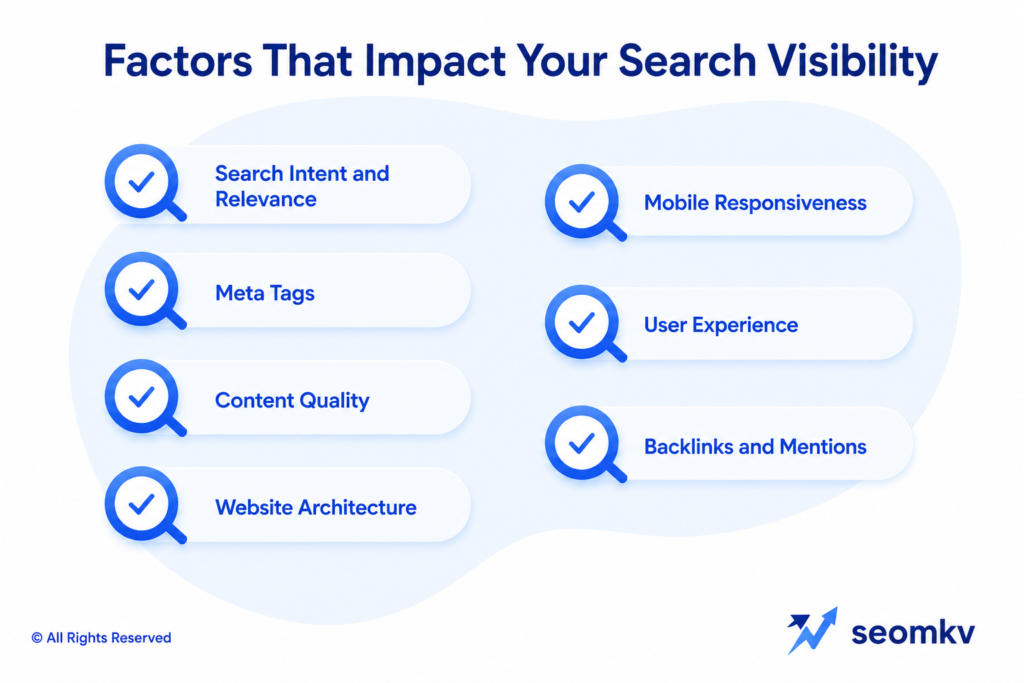
Factors That Impact Your Search Visibility
Many things affect your site’s search visibility. Some come from your site. Others come from outside. If your seo visibility score drops, it helps to look at all of these factors.
- Search intent and relevance: Search engines want to give people answers that match what they need. That’s why your content must match the user’s search query. If someone is looking for “how to fix a bike chain,” your content better teach that. If it’s off-topic, your ranking drops. Search engines understand intent more than ever, so relevance is key to increase search engine visibility.
- Meta tags: Meta tags, like title tags and meta descriptions, help search engines understand your pages. They also tell users what the page is about in the google search results. If your tags are missing or not clear, users might skip your link. Good meta tags improve your click through rate (CTR) and help search engine rankings.
- Content quality: Search engines like fresh, helpful, and original content. If your content is full of errors, duplicate content, or missing useful info, your seo visibility will suffer. Write for people, not just for keywords. But still, use relevant keywords naturally. High content quality helps you reach organic search visibility.
- Website architecture: A clear and simple site layout helps users and search engines move through your site. If your structure is messy, search engines may miss pages. Good website architecture also helps with internal links. That helps boost your visibility score by pointing traffic to important pages.
- Mobile responsiveness: More users search on mobile devices than on desktops. If your site looks bad on a phone or takes forever to load, visitors will leave. Search engines notice this. A mobile-friendly website keeps people on your site longer and helps your seo visibility score.
- User experience: Is your website easy to use? Are buttons easy to click? Does it load fast? These things matter. A smooth user experience makes visitors stay longer. This can boost your site’s visibility in organic search results. Google uses this data to decide your search engine rankings.
- Backlinks and mentions: When other websites link to you, it tells search engines your content is trusted. High quality backlinks from sites in your niche are powerful. Mentions of your brand name also help. These off page seo factors improve your domain’s seo visibility over time.
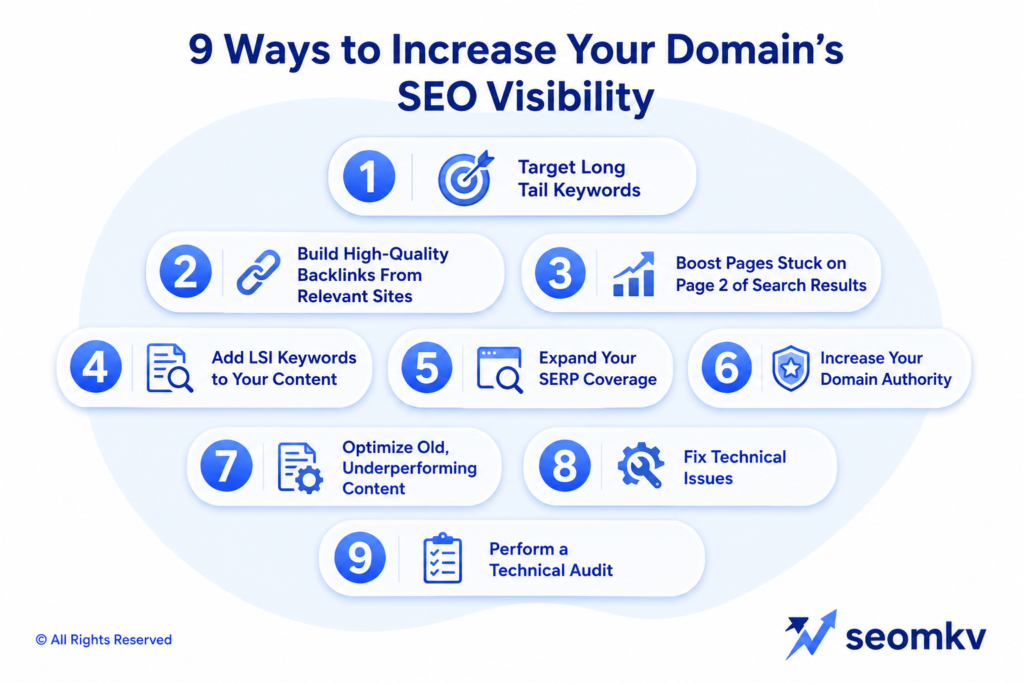
9 Ways to Increase Your Domain’s SEO Visibility
Improving your SEO visibility takes work. But the right steps can grow your rankings fast. Here’s how to boost your domain’s seo visibility and show up more often in Search Terms results.
1. Target Long Tail Keywords

Long tail keywords are longer and more specific search phrases. They have lower competition. That means it’s easier to rank for them. For example, instead of “shoes,” target “running shoes for flat feet.” These keywords bring in people looking for exact answers. Adding these helps improve seo visibility and brings more organic traffic.
2. Boost Pages Stuck on Page 2 of Search Results
Sometimes your pages almost rank well but don’t make the first page. That’s a missed chance. Use seo tools to find these pages. Then, update the content. Add LSI keywords, improve internal links, and make sure it’s matching the search intent. That extra push might move it to page 1.
3. Build High Quality Backlinks from Relevant Sites
Backlinks act like votes for your content. When other websites link to you, it shows trust. Make sure the sites linking to you are in your niche and have good seo visibility scores themselves. Avoid spammy links. Focus on link building through guest posts, partnerships, or helpful content others want to share.
4. Add LSI Keywords to Your Content
LSI (Latent Semantic Indexing) keywords are words related to your main keywords. They help search engines understand your topic better. For example, if your page is about “apple pie,” LSI keywords might include “baking,” “dessert,” or “cinnamon.” These improve keyword visibility and search engine optimization without stuffing keywords.
5. Expand Your SERP Coverage

Don’t just aim for the first spot. Try to get rich snippets, images, or “people also ask” sections. These parts of engine results pages SERPs bring extra traffic. Use structured data and clear headings. Answer common questions. This increases your chance of showing up in more spots.
6. Increase Your Domain Authority
Domain authority shows how strong your site is in the eyes of search engines. It depends on backlinks, content, and age. Grow it by publishing valuable content, doing outreach, and fixing broken links. A strong domain gets higher ranking keywords and better seo visibility metrics.
7. Optimize Old, Underperforming Content
Old posts might be losing traffic. But they still have value. Use tools like google analytics to see what pages are dropping. Update stats, fix grammar, and add new details. Change the meta tags if needed. This helps boost your website’s search visibility again.
8. Fix Technical Issues

Technical SEO problems hurt your site’s seo health. Broken links, slow pages, or missing tags confuse search engines. Fixing these helps your pages get indexed and ranked better. Tools like Google Search Console and SE Ranking can show where problems are hiding.
Improve Internal Linking, Crawlability, and Indexability
Internal links connect your pages. They help users and search engines move around. Make sure your links are clear and lead to related content. Also, fix crawl issues. Check if all important pages are in Google’s index. This makes sure your site can be seen and ranked.
Optimize Your Images
Images can slow down your site. Use small file sizes and add alt text. Alt text helps search engines understand the image. It also improves your chance to show up in image searches. Well-optimized images help boost seo visibility across all platforms.
Optimize for Core Web Vitals & Page Speed
Google checks how fast and smooth your site is. These are called Core Web Vitals. If your site loads slow or moves around too much, users get annoyed. That can hurt your ranking. Use free tools to test and improve speed. Every second counts.
9. Perform a Technical Audit
A full audit shows you what’s working and what’s broken. Use a position tracking tool or seo tools like Moz or SEMRush. Check title tags, crawl errors, duplicate content, and mobile design. A technical audit helps fix issues before they become big problems.
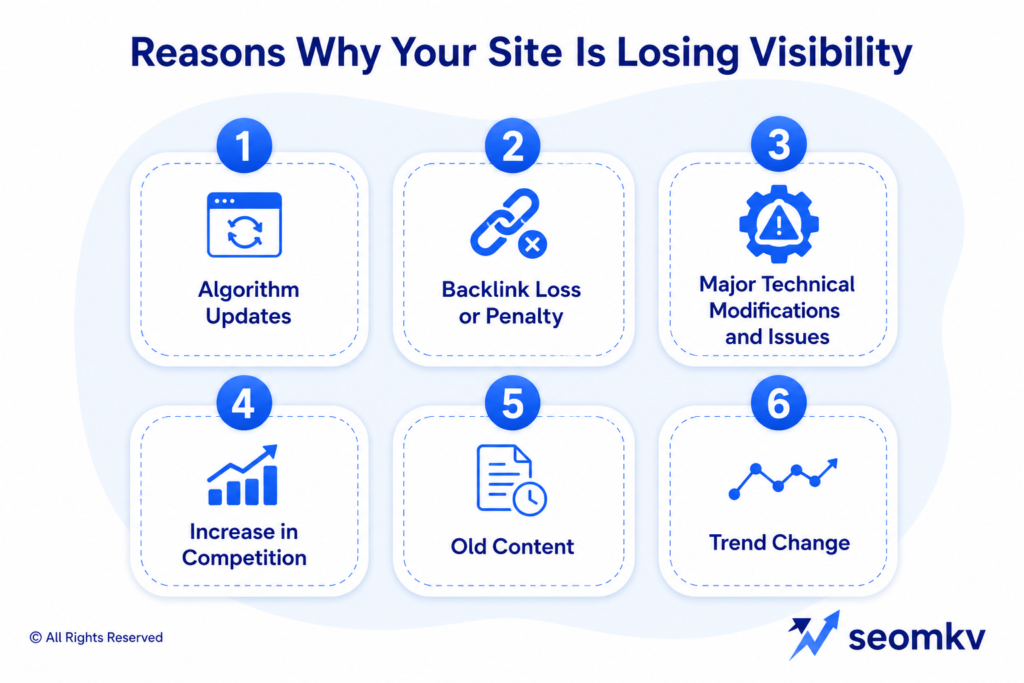
6 Reasons Why Your Site Is Losing Visibility
If your search visibility drops, don’t panic. Look at what might be causing the change. These are the usual suspects.
- Algorithm updates: Google updates its algorithms often. These changes affect how pages rank. If your site was using outdated tricks or low-quality content, you might drop in the search engine results. Stay updated and make sure your site follows the latest search engine optimization rules.
- Backlink loss or penalty: If important backlinks get removed, your rankings can fall. Google also gives penalties for spammy links. Use a free tool or google search console to check your backlinks. Replace bad links with good ones. This helps bring back your site’s visibility.
- Major technical modifications and issues: Changing site structure, moving pages, or adding broken code can hurt visibility. These changes confuse search engines. If pages disappear from google’s index, your visibility score drops. Always test before making big changes.
- Increase in competition: If other websites in your niche are improving, your ranking might fall. Watch your competitors using SEO tools. See what keywords they target. Then improve your own pages with better content and stronger backlinks.
- Old content: Content gets old fast. If your posts are outdated, search engines may rank others higher. Refresh your articles. Update facts, add new images, and optimize for mobile devices. This keeps your site relevant and visible.
- Trend change: Sometimes users search for different things. Maybe a keyword isn’t popular anymore. That’s a trend shift. Keep track of keyword data using tools like SEMRush. Then adjust your content to match what users search for today.
Track Your SEO Visibility with the Right Tools
You can’t improve what you don’t measure. These tools help you track, understand, and grow your SEO visibility.
1. Google Search Console

Google Search Console shows how your pages appear in google search. You can track ranking keywords, fix errors, and see what’s indexed. It also shows click through rate (CTR), keyword rankings, and helps find search visibility drops.
2. Google Analytics

Google Analytics tracks visitors. It tells you where traffic comes from, what pages they visit, and how long they stay. This helps you understand how well your seo efforts are working and what content needs more focus.
3. SEMRush

SEMRush is a powerful SEO tool. It tracks your keywords, backlinks, and competitors. You can use it to see how your website ranks in google search results. It also shows changes in your visibility score over time.
4. SE Ranking

SE Ranking is a position tracking tool. It helps measure your keyword visibility and search engine rankings. You can use it for audits, backlink monitoring, and keyword research. It’s helpful for keeping track of seo visibility metrics.
5. Moz

Moz offers tools to check your domain authority, keyword data, and more. It helps you measure organic search visibility. Use it to find issues hurting your site’s SEO health and fix them before they get worse.
Keep Your SEO Visibility on Track
SEO is never a one-time job. Keep checking your site. Update old posts. Watch your competitors. And always fix errors fast. Use tools like google analytics and google search console to track progress. With steady effort, your site can stay visible, helpful, and strong in the search engine results pages.
Even small updates can make a big difference. Refreshing a headline, changing a title tag, or adding a few relevant keywords can move your page up in search engine rankings. Don’t wait for traffic to drop before you act. Stay ahead. Use SEO tools often. Make it a habit. The more care you give your site, the better your search visibility metric will grow over time.
FAQs
What does a 0 score mean?
A score of 0 means your website is not showing up at all in search engine results. This could happen if your site is brand new, has been removed from Google’s index, or has serious technical issues. It might also mean your keywords are not being tracked correctly. You should check your seo tools and start fixing basic problems fast.
How often should I check my SEO visibility?
You should check your SEO visibility at least once a week. This helps you notice small changes before they become big problems. If you’re running a campaign or changing your site, check more often. Regular tracking helps keep your site’s SEO health strong.
Is SEO visibility the same as keyword rankings?
Not exactly. Keyword rankings tell you where one keyword stands in search engine results. SEO visibility looks at how all your keywords perform together. It gives a bigger picture. A good seo visibility score means your site is doing well across many ranking keywords.
How long does it take to increase SEO visibility?
Is low visibility always a sign of poor SEO? Not always. Sometimes a site is new or not tracking the right keywords. Low visibility can also come from outside reasons like changes in trends or more competition. But if your score stays low for a long time, it’s usually a sign that your seo efforts need