Have you ever wondered why some websites show up at the top when you search for something What is SERP Ranking? That’s called SERP ranking, and it helps people and businesses get noticed online. When you search on Google or other search engines, what you see in the results depends on where a site ranks. Getting a better SERP ranking means you’ll get more visitors to your website.
This guide will explain what a search engine results page is, why it’s important, and how you can keep track of your ranking to help your web page get more attention. We’ll also talk about SERP ranking and how it can help your business grow.
What is SERP Ranking Results Page (SERP)?
A search engine results page (SERP) is the list of results you get after typing something into Google or Bing. When a user enters a question or search terms, the search engine uses its algorithm to scan millions of web pages and choose the most relevant results.
The search results include all kinds of things: organic results, paid ads, featured snippets, images, news articles, and sometimes even a video carousel. SERP features help you find the direct answers you want. It’s mostly everyone’s goal to reach the first page of organic search results since more people will see your website there.
The Importance of SERPs for Search Engine Optimization (SEO)
SERPs make a huge difference for SEO, which is all about making your website show up higher in search results. Every website owner wants their site to appear in the top results pages. If you want higher rankings and more visitors, you need to focus on what shows up on the Google SERP.
Monitoring the search engine results page helps you know what works and what doesn’t. You’ll see which sites, SERP features, and keywords are helping sites like yours succeed. By understanding the Google search results for the keywords you care about, you’ll make smarter choices to help your page rank higher every time someone searches.
5 Ways to Improve Your Google SERP Position
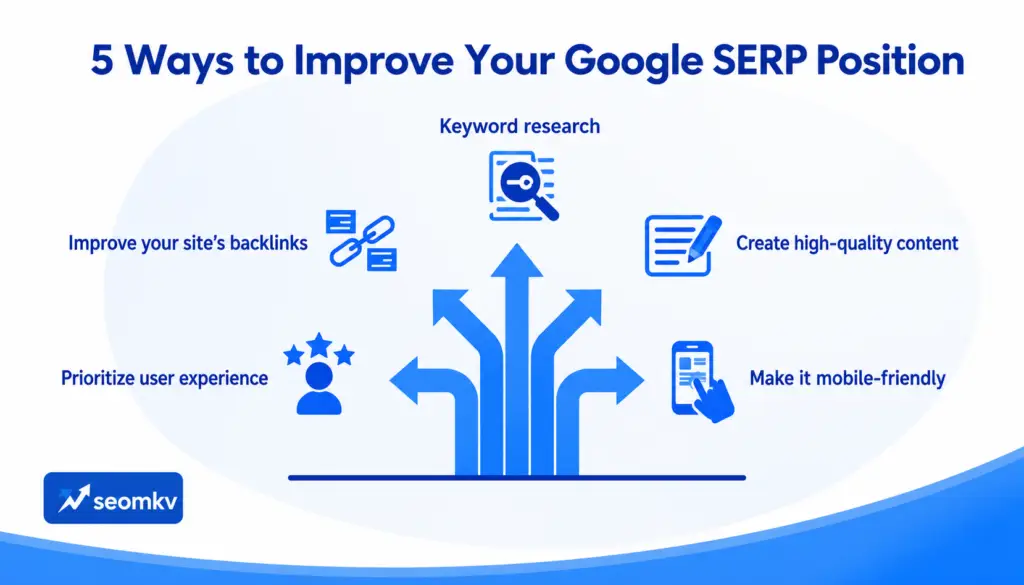
It’s not easy to climb the rankings on Google. There’s a lot of competition for that first page spot. You can’t just throw some keywords on a page and hope for the best. You need a plan. Let’s look at five ways to boost your place in the search results.
1. Keyword research
The first step in ranking higher is smart keyword research. This is where you figure out exactly what people are searching for in your industry or niche. With tools that show you search volume and keyword difficulty, you’ll know if people are looking for what you’re offering and if the competition is tough. Choose target keywords that relate to your topic, match the user’s query, and have a good chance of bringing in visitors. Good keyword research sets you up for success on the SERP and makes sure your content is relevant for both users and search engines.
2. Create high-quality content
Content is at the heart of everything in SEO. Google’s search engine results page shows the most helpful, well-written, and unique information at the top. To rank in organic search, your website needs to answer questions better than anyone else. Use examples, steps, photos, or simple explanations so anyone can understand. Add structured data if possible. Think about what a user wants: Quick answers, full explanations, or maybe inspiration? Creating great content has helped many sites win top rankings, and it can help you, too.
3. Make it mobile-friendly
Most people use their phones more than computers to search. If your web page doesn’t look good on a phone or tablet, people will leave. Google gives better rankings to mobile friendly sites. Make sure your text is readable, links are spaced out, and the website loads quickly. If your site works for everyone on any device, your position on the search engine results page will improve. It can be the difference between being seen or getting ignored, especially with mobile-first indexing now a big ranking factor.
4. Improve your site’s backlinks
Backlinks act as votes of trust for your website. When another trusted site links to your web page, Google takes it as a sign that your content is valuable. Link building takes time, but it’s one of the biggest ranking factors. You can get backlinks by making helpful guides, tools, or articles that people want to share. You might even write for other sites or get listed in directories related to your topic. More quality backlinks help your site climb to higher rankings in the search engine results.
5. Prioritize user experience
User experience (UX) is about making your site easy and enjoyable to use. Websites that are confusing or slow get pushed down in the Google search results, no matter how good their content is. If people click your link and then quickly leave, that’s called a bounce, and it can hurt your rankings. Focus on making your site simple to navigate, fast to load, and pleasant to read or look at, and even add things like star ratings if possible. The better your user experience, the more likely your page is to land near the top of organic results.
How Tracking SERPs Can Elevate Your Business?
Checking your site’s place on Google isn’t just for SEO experts. It helps any business be smart about reaching the right people. When you monitor where you appear on the search engine results page, you can make changes to attract more visitors and beat your competition. Let’s see how tracking SERPs makes a difference.
It Shows You What Google and Your Audience Want
Watching the SERP gives you a window into what works. If you check the top spots, you’ll see which pages Google likes, what users are clicking on, and which search results get featured.
- User intent: What do people really want when they search for something? That’s user intent. Looking at the first page of results helps you figure out what users and Google value: are people after information, shopping, a news update, or a direct answer? For instance, if “best headphones” brings up product reviews and ratings, your content has to meet that need. Adjusting your page to match the user’s query boosts your odds of being shown in relevant results.
- Content types: Not all results on the SERP look the same. Sometimes Google shows a video, a featured snippet, or even a cluster of top stories. By reviewing the content types that appear, you get ideas for your strategy. Is everyone using blog posts, product lists, or instructional videos? Matching the preferred format helps your website appear higher in search results, whether you’re targeting featured snippets, knowledge graph spots, or just regular blue links.
- Engagement trends: Engagement is about how users interact with search results. Do they click on listings with images? Do “People Also Ask” questions show up? Watch for these SERP features and make sure your pages encourage clicks or interactions. You could use catchy titles, clear summaries, or answer popular questions to stand out. Noticing these trends helps you update your SEO so you get more out of every visitor.
Monitor Competitor SERP Positions
It can be eye-opening to see which sites beat you and why. By tracking competition with a SERP checker, you’ll spot chances to move up.
- Strengths to learn from and weaknesses to target: Do your competitors always land the first spot? Check what they’re doing right. Maybe their site is faster, or they use better keywords in the title tag. Learn and adapt. At the same time, see where they fall short: slow load times, old data, or clunky navigation. Targeting these weak points lets you leap ahead in search rankings.
- Content gaps that you can dominate: What topics are your competitors missing, or which questions do they leave unanswered on the SERP? If your research shows gaps—like questions in the “People Also Ask” section without full answers—that’s a spot where you can create better content. Owning those topics helps get your page noticed, even for search terms your competitors ignored.
- Overlooked keywords worth pursuing: Your competition may focus on big, hard-to-rank keywords. Try looking for smaller, overlooked keywords using a SERP checker or keyword research tool. Maybe you find phrases with less competition but enough search volume to bring in visitors. Targeting these helps you sneak onto the first page of Google search results and build authority one search query at a time.
Track Your Website’s Organic Rankings
It’s important to watch your own progress, not just your competition. Tracking your organic results tells you if your efforts are working.
- Spot trends: By checking your SERP ranking regularly, you’ll see patterns—like certain keywords slowly getting better rankings or dropping off. Are some keywords sending less traffic than before? These trends give you clues on which strategies work and which need a boost. Using a tool or manual searches, tracking your progress keeps your efforts on track.
- React to updates: Google’s search engine algorithm changes often. Sometimes an update can change the results page overnight. If you’re watching your SERP positions, you’ll spot jumps, drops, or sudden changes quickly. That lets you adjust fast, fixing what’s broken or putting more effort into pages that are at risk.
- Fine-tune efforts: SEO is like a science project; you always have to adjust your approach. If you learn that some pages don’t improve in rankings, you can try changing the text, adding links, or updating images. If your best-performing keywords stop working, try adding new target keywords. Little improvements, based on your tracking data, push your site higher over time.
Detect and Fix Traffic Losses Quickly
Suddenly losing web traffic is frustrating. But by watching your SERP positions, you can find what’s wrong fast.
- Diagnose the problem: A traffic drop usually means your page lost ground for a key search term. If you use a SERP checker, you’ll spot which keywords are no longer on page one or have lost featured snippets. Then, you can figure out why: maybe a competitor published something new, or an algorithm change reshuffled the results page.
- Prioritize solutions: Some problems matter more than others. If you lose ranking for a keyword that brings in a lot of buyers or readers, make fixing that your first job. For example, if your product page disappears from the google SERP, focus there instead of stressing about less important search terms.
Verify the Impact of Your SEO Efforts
You invest time and sometimes money into SEO. You need to know if changes work.
- Which optimizations drive results. Make changes, then monitor if your rankings move up. If they do, keep doing what works. If not, try a different angle. For example, if changing your title tag helps jump to first page, update the rest of your site with similar ideas.
- Whether backlink strategies are paying off. Link building is slow, but worth it. Watch for pages gaining better positions after new links are built. If rankings improve, your outreach pays off. If nothing changes after lots of effort, switch tactics.
- How quickly updates affect rankings. Some SEO improvements only take a week or two to show up, but others take longer. By tracking positions daily or weekly, you’ll see how soon results happen. This patience helps you avoid giving up on good strategies too early.
Tools and Technologies for SERP Monitoring
To really know your SERP rankings, you need tools built for the job. Tools save time and show more data than you could by checking manually. They also track hundreds of keywords across devices and locations. There are lots of SERP monitoring tools, some simple, some packed with features. Picking the right one means thinking about what you need and how you want to use the data.
SEMrush
SEMrush is a popular digital marketing tool that lets you track your keywords and see where you appear on the search engine results page. You get updates for mobile and desktop results, competitor analysis, and fresh keyword ideas. SEMrush helps you compare your site to others, showing where you’re ahead or behind. It’s also loaded with extra features, like suggestions for link building and finding relevant pages to target.
Ahrefs
Ahrefs is well-known because it has a massive database of backlinks and keywords. Their rank tracker shows you exactly where you stand in Google search results for every target keyword. You can watch your rankings by country, city, and device, and see which SERP features your site wins. Ahrefs even breaks down things like keyword difficulty and helps you set up campaigns to track progress over weeks or months.
Moz
Moz is great for users who want simple, clear reports. Their Rank Checker tool monitors your keywords, compares results to competitors, and gives you a “search visibility” score. Beginners like its plain dashboard, while advanced users use Moz for regular technical audits, keyword research, and tracking changes across their site. Either way, Moz is trusted for helping websites appear higher in the organic search results.
Integrating SERP Tools with Other Platforms
To get even more use from your SERP tool, connect it with other marketing software. Integration helps you see the big picture by combining ranking data, web traffic, and conversions. This gives you a better idea of how changes increase visits or sales. Most leading tools offer simple ways to connect; let’s see where you can start.
Google Analytics Integration
When you link your SERP checker with Google Analytics, you can match keywords and rankings with visitor behavior. For example, you might see that moving up even one spot for a keyword caused a spike in traffic. You’ll also know which keywords attract your most active site users, not just visitors who click and leave. This gives you proof that a keyword is actually bringing in potential customers, not just empty clicks.
Google Search Console Integration
Google Search Console, or GSC, is a free Google tool that shows you impressions, clicks, ranking averages, and the actual data behind each keyword. If you merge it with your SERP tracker, you spot mismatches between what Google says and what your tool shows. You’ll uncover new search terms and see if you missed any relevant results, making your approach stronger.
Determining Tool Effectiveness
Not all SERP monitoring tools are built the same. Before you pick one, check if it meets your specific needs. There are three main things to look at before deciding.
Accuracy
A tool that gives the wrong data is almost worse than none at all. You want your SERP checker to show what real users see on the search engine results page. Features like manual update checks, device/location choices, and GSC integration make a big difference. If a tool’s rankings and the actual Google search results never match up, keep looking.
Usability
A tool has to be simple enough for you or your team to use every day. Fancy reports aren’t helpful if you can’t figure out what to do with them. Dashboards, filtering, and fast ways to get to your most important keywords make everything easier.
Cost-Effectiveness
SERP tracking tools range from totally free to very expensive. Some offer basic features, others give you everything. Find what matches your actual needs because paying for more than you’ll use doesn’t help your SEO. Even the best-reviewed tool won’t work if it’s over your budget, so shop smart.
Common Pitfalls and Solutions
It’s easy to mess up when you’re new to tracking SERP rankings. Here’s what often goes wrong, and how to fix it.
Inaccurate Data
Sometimes your rankings in the tool don’t match what you see on your screen. Google might show people different results based on the user’s location or previous searches. Always use incognito mode for a fair comparison, and choose a SERP tool with flexible settings so your data is as close as possible to reality.
Overlooking SERP Features
It’s not just about blue links anymore. There are featured snippets, paid ads, news boxes, star ratings, and more showing up in results. If you ignore them, your site might miss a huge opportunity to grab users’ attention, from getting that “direct answer” box to being listed in top stories. Track every important feature, not just your main organic results.
Future Trends in SERP Monitoring
Search changes all the time, so tools have to change with it. Some new trends are already here, while others are just around the corner. Staying informed will help your site keep its spot on the first page.
AI and Machine Learning
AI and machine learning are making SERP tracking tools much more advanced than ever before. Instead of just checking where a site ranks, new tools use smart programs to analyze patterns, spot big changes, and even guess what will come next. AI can compare information across many search engine results and spot things a human might miss. For example, if a news article suddenly starts ranking in your space, AI tools notice and warn you. As these technologies grow, businesses will get better at predicting what works, saving time on boring tasks, and staying ahead in the SERP.
Predictive Analytics
Predictive analytics is like having a crystal ball for your keyword rankings. These systems study past ranking changes, sudden spikes, and even how competitors move up and down. If your web page usually moves up before holidays or new product launches, analytics might alert you to boost content or ads early. You’ll see warnings for ranking drops or chances to move higher, giving you time to react before your traffic takes a big hit. This proactive strategy is becoming a key feature of modern search tools.
Automated Insights
Automated insights mean you don’t have to spend hours digging through endless lists of data. AI takes all the search results, clicks, and keyword movements from different sources and makes suggestions for you. Let’s say an algorithm update hits, and your product page goes missing from the first page. Your SERP tool alerts you, tells you which keyword needs work, and even points out if your site is slowed down. All this happens in real time, so you can act fast and recover your top spot quicker.
People talk to their phones and virtual assistants more every year. Voice Search Optimization Strategies changes what kind of content and answers appear on the SERP.
Voice Search Algorithms
When Google processes voice queries, it often gives just one direct answer (usually a featured snippet or top organic search result). Knowing which results win these spots helps you aim for them by using natural language, answering questions, and having clear, structured data.
Content Optimization for Voice
If someone asks, “How do I clean sneakers?” Google picks the best, clearest answer, often from a site that uses question-based headings, bulleted lists, or helpful short steps. Structure your content that way, and you might win the answer box.
Enhanced User Experience (UX)
User experience is more important each year. Google pays close attention to how easy and enjoyable your website is to use. If people can’t find information fast, or if your layout is confusing, they may leave quickly. Things like fast loading times, secure pages, and clear menus make a big difference. Even small changes, like bigger buttons for mobile users, can lead to more clicks. Improving overall usability keeps visitors happy and boosts your search engine rankings.
Core Web Vitals
Core Web Vitals are specific stats Google uses to judge if your site is healthy. They look at how fast your web page loads, how quickly users can interact with it, and if things stay stable as the page appears. If your photos move around while loading, visitors may get frustrated! Use free tools like Google Search Console to check your Web Vitals. Making sure your site scores well here helps you achieve higher rankings and keeps people coming back.
Mobile-First Indexing
Now Google examines your site’s mobile version first when figuring out your rank. If your mobile website is easy to read, loads in just a second or two, and works on different devices, you’ll climb the search engine results. Most users search on their phones, so a mobile-friendly design is critical for SERP ranking. Test your site on different phones, fix any slow-loading pages, and avoid tiny text or buttons. A strong mobile site attracts more visitors and outranks slow or cluttered pages.
Google checks your mobile version first. If your mobile site works well, loads fast, and has all the features, you’ll stand out for phone-based users, i.e., most people searching these days.
Track Your Target Audience’s Behavior on SERPs Using SERP Tools
Who actually clicks your link? SERP tools now show not just rankings, but user behavior like click-through rates. Look at which headlines, images, or star ratings get attention. Change your web page listings to stand out. Even moving from position 5 to 3 on the SERP can mean a lot more visits! Watching real user data helps you fine-tune your description, title tag, or content so more people pick your website from the results pages.
FAQs
What are the best practices for effective SERP monitoring?
To get real results from SEO, it’s smart to shape a plan for checking your rankings. Start with a regular routine. This way, you’ll notice which moves help your page climb or fall on the search engine results page. Keep your goals crystal clear and review your data honestly. Let your findings guide every change for your website over time.
Regular monitoring and reporting
Regular monitoring and reporting let you see how your site is trending. Watch closely so any sudden dip or boost in position doesn’t catch you off guard. Checking in often helps you respond right away, not after you lose visitors. By making reporting part of your routine, you’ll catch issues early and show others on your team how your SEO work shapes progress. Steady tracking keeps your goals in sight and your strategy sharp.
Daily Tracking
When you track your search rankings each day, you spot shifts sooner. Maybe a new competitor shows up or Google runs another update. By checking daily, you’ll see trouble quickly (like if a key page starts dropping for an important search term). It’s a lifesaver for news sites or businesses where fast changes matter, because those quick reactions can save traffic and sales before a problem grows.
Weekly and Monthly Reports
Digging into weekly or monthly reports is good for seeing patterns. If you post lots of content or test new ideas, you’ll notice what’s working and what’s not. Instead of stressing over every small drop or gain, you’ll focus on real trends—steady ranking growth or the impact of a new campaign. Regular reports give you proof of progress and help you explain results to teammates, making everyone more invested in success.
Setting Clear Objectives
Decide what you actually want from your SERP tracking before you start. Write clear goals: a better rank for your main service, claiming a featured snippet, or just staying ahead of local rivals. Then focus your tracking around those aims. When you know what winning looks like, you’re less likely to get lost in numbers and more likely to spot what needs attention.
Target Keywords
Picking target keywords is kind of like building a wish list for your business. Choose the search terms that truly make the most sense for what you offer. Maybe that’s your best-selling product or something people regularly search for, like “pizza delivery near me” if you own a restaurant. Focus on keywords that fit what makes your website special and have enough people searching to matter.
Performance Indicators
How do you tell if your SEO is pulling its weight? Set a few specific measurements, like ranking in the top five, getting that featured snippet, or boosting your share of organic results. These markers help you see if your strategy is working and make it easier to track wins and slips. By defining these indicators up front, you’re not guessing; every action you take ties back to what matters for your site.
Actionable insights
Actionable insights turn SERP data into steps you can actually use. When you spot which changes bring better rankings or more traffic, you can double down on what works and skip what doesn’t. Seeing what’s helping you move up the search results means your next moves are smarter. This approach helps fine-tune your SEO and brings real, lasting results over time.
Data Analysis
Don’t just track your rankings but try to understand the “why” behind any big changes. If your site jumps to the top for a search term, look at what changed. Did you add new links or update your content? Use a SERP checker and analytics tools to dive deep into the numbers. Knowing why you gained or lost rankings can help you repeat your successes.
Strategic Adjustments
Once you gain some insights, use them to improve your site. Maybe Google is showing more video carousel links at the top for your main keywords. If so, making a short video could help you win more clicks. Updating outdated information or adding structured data can help your web pages get featured snippets or other SERP features. Each small improvement can make a real difference!
What can you learn by tracking your competitors’ keyword rankings with a rank checker?
A rank checker lets you uncover your competitors’ full strategy: what keywords they rank for, which search results bring their best traffic, and even their weaknesses. You can learn which content types get them onto the first page and where there are gaps in their coverage. For example, if you see they get a lot of visitors from “free study guides,” you could write better guides to capture some of their audience, too.
Why is on-page SEO crucial for achieving better SERP positions?
On-page SEO is a huge part of the whole SEO puzzle. It lets Google’s algorithm and users see exactly what your page is about. Proper on-page SEO means using target keywords in places like your title tag, URLs, images, and headings, so Google knows to show your site for those search queries. Without this, all your hard work on backlinks and site speed might not matter, because search engines can’t match your page to the right result.
Which keywords should you analyze while monitoring your competitors’ SERP?
Start by focusing on the keywords where your competitors appear high in the search engine results page, but you don’t. These are big opportunities for growth. Also, spot the search terms where you rank just below them; it’s often easiest to move up here with better content or stronger backlinks. Don’t ignore long-tail keywords or terms with growing search volume, since they can bring targeted users to your website and help your results pages dominate new areas.